World Oral Health Day

World Oral Health Day: A Call to Action for a Healthier Smile
Oral health is of utmost importance.Maintaining good oral health is crucial for overall well-being. It prevents tooth decay, gum disease, and bad breath, while also boosting self-confidence and quality of life. Moreover, research links poor oral health to various systemic diseases, such as diabetes, heart disease, and respiratory infections.
March 20th marks World Oral Health Day, a global awareness campaign that highlights the importance of oral health and its impact on overall well-being. The theme for this year’s campaign is “Say Ahh: Act On Mouth Health,” emphasizing the need for individuals to take action and prioritize their oral health.
According to the World Health Organization (WHO), oral diseases affect approximately 3.5 billion people worldwide, with tooth decay and gum disease being the most common conditions . In India, the situation is no better. A study published in the Journal of Clinical and Diagnostic Research found that nearly 70% of Indians suffer from periodontal disease, with the majority being unaware of their condition .
The good news is that most oral diseases are preventable through simple measures such as brushing teeth twice a day, flossing regularly, and visiting the dentist for regular check-ups. In India, the government has launched initiatives such as the National Oral Health Programme to promote oral health awareness and provide accessible dental care services .
As we observe World Oral Health Day, let us take a pledge to prioritize our oral health and encourage others to do the same. By working together, we can create a healthier, happier smile for ourselves and future generations.
We need to take oral health very seriously and take pledge on World oral health to safeguard over oral health dynamics.

The Revival of Traditional Crafts, cover story 17 March 2025

The Revival of Traditional Crafts
News Kashmir Analysis
Kashmir is known throughout the world for its great crafts.
In the picturesque valley of Kashmir, a centuries-old tradition of craftsmanship continues to thrive. The region is bestowed with diverse handicrafts and handloom products, including Papier Machie, exquisite shawls, wood carving, intricate carpets, and delicate papier mâché, have been a testament to the skill and artistry of Kashmiri artisans. Despite facing numerous challenges, the exports of these traditional crafts have shown remarkable resilience, with recent figures indicating a significant surge in demand.
Despite facing hurdles due to global conflicts, exports of Kashmir’s famous handicrafts and handloom products have touched ₹2,567 crore over the past two and a half financial years. Officials anticipate the total exports to reach ₹3,000 crore by the end of the current fiscal year.
Throughout world currently  where fast fashion and mass production dominate the consumer market, a quiet revolution is taking place. Traditional crafts, once on the verge of extinction, are experiencing a remarkable resurgence. From handmade textiles to artisanal ceramics, these timeless skills are not only being preserved but also reimagined for a new generation.
At the heart of this movement is a desire for sustainability and authenticity. Consumers are increasingly seeking out unique, high-quality products that tell a story and reflect the human touch. In response, artisans and makers are rediscovering traditional techniques, often blending them with modern materials and designs. The result is a new wave of innovative, eco-friendly products that are as beautiful as they are functional.
One notable example is the revival of natural dyeing. For centuries, artisans used plants, minerals, and other organic materials to create vibrant, sustainable colors. Today, this ancient craft is being rediscovered by textile designers and fashion brands seeking to reduce their environmental footprint. From indigo-dyed denim to turmeric-colored silks, the possibilities are endless.
As the demand for traditional crafts continues to grow, so too do the opportunities for artisans and communities.
The valley of Kashmir in recent times is also seeing revival of traditional crafts with full Government support which is a heartwarming development.
As we look to the future, it’s clear that traditional crafts have a vital role to play in shaping a more sustainable, equitable world. By embracing these timeless skills, we can not only preserve our cultural heritage but also create a new era of conscious consumption and community-driven innovation.

News Kashmir organises landmark event on Women’s Month and World Women’s Day

  1. News Kashmir organises landmark event on Women’s Month and World Women’s Day

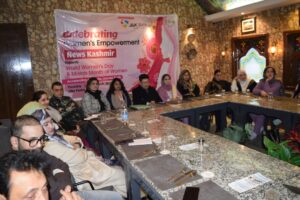
News Kashmir Weekly hosted a grand event today, March 13, 2025, at Hotel Downtown, Little Persia Srinagar, to commemorate World Women’s Day and Women’s Month. The event was made possible by Jammu and Kashmir Bank, the exclusive banking sponsor, and Fortis Hospital Mohali.

Rameez Makhdoomi, Content Editor of News Kashmir, and Farzana Mumtaz, Editor-in-Chief of News Kashmir, moderated the event. The theme “Accelerating Action for Gender Parity” was discussed at length by participants, who spoke about the importance of women’s empowerment and gender equality.
Well known Advocate Sana Khan ensured smooth deliberations of the entire programme .
Renowned personalities from various fields attended the event, including Dr. GN Qasba, former SMC Commissioner and eminent social personality; Professor Shabnam Ara, National Award winner and Dean of Students’ Welfare at Cluster University; Bilquis Mir, world-famous water sports athlete; and Anbreena Anjum, Executive Engineer at Water Works Jal Shakti Division, Srinagar. Mantasha Binti Rashid, Deputy Director Rural Sanitation, were present as a guest of honor.

Other notable attendees included Saika Rashid, Engineer and well-known Calligraphy artist; Zehra Shafi, renowned Journalist working with PTI; Munazah Kanwal, Eminent Journalist; Mir Sabeen Gulrez, Budding Journalist; Sabhat Mir, eminent social rights personality; Ambreen Nawaz, prominent Entrepreneur; Ishrat Tanki, well-known educationist; and Eliza Izhar, educationist shared their vibrant thoughts.

Bilal Bashir Bhat, Editor-in-Chief of Daily Srinagar Jang; Rizwan Geelani, prominent Journalist working with Greater Kashmir; Imran Naiku, well-known journalist working with Gulistan News; Khursheed Qureshi, Veteran Journalist; Imran Ali, healthcare professional; Badrunissa Bhat, well-known research scholar and Sufi artist; and Advocate Sharif, well-known lawyer, also participated in the event and shared their thoughts.

All the participants were felicitated for their contributions towards women’s empowerment.

Academic Expert Sheikh Sameer and eminent oncologist Dr. Shabnam Bashir also shared their valuable insight .

Territory Head J&K, Policy Advocacy Research Centre (PARC), Ruchita Rane, also attended the event and shared her expertise.

The event concluded with a vibrant discussion on women’s rights and ensuring safe working environments. A gender-just Jammu and Kashmir was resolved upon unanimously by all participants.

Stolen Futures: How Educational Negligence is Shattering Students’ Dreams”

“Stolen Futures: How Educational Negligence is Shattering Students’ Dreams”
By Sheikh Ishrat Tanki
Education is not a privilege; it is a fundamental right that must be protected for every child, regardless of their financial background. Yet, the recent negligence in issuing roll number slips to students in Kashmir exposes a harsh reality—
And poor administrative decisions jeopardize students future
And crush the dreams of hardworking students while the privileged remain unaffected.

This is not just an isolated incident; it reflects a systemic failure that demands urgent attention. If the children of wealthy families faced such negligence, the issue would have been resolved instantly. But when it comes to students from poor and middle-class backgrounds, no one is held accountable.

To the Administration: Take Responsibility!

Why should students suffer due to your inefficiency?

Why is there no emergency redressal system for such cases?

Why does justice come only after protests and public pressure?

Your negligence is not just a mistake—it is an injustice that impacts the mental health, confidence, and future of young minds. Every year, students put in immense effort to succeed, yet their hard work is undermined by your incompetence. You are failing the very children you are supposed to educate and empower!

To the Community: Raise Your Voice!

If we stay silent today, more students will suffer tomorrow.

If we don’t demand reforms, these injustices will keep happening.

If we don’t hold authorities accountable, our children’s futures will continue to be at risk.

This is not just about education; this is about equity, justice, and human rights. The poor cannot be left to struggle while the rich find alternatives. The education system must serve everyone equally, and we must demand accountability, transparency, and reform.

The time for excuses is over. We need action. We need justice. We need a system that values every student’s future. If the administration fails to act, the community must come together and fight for change. The dreams of our children depend on it!
Sheikh Ishrat Tanki is well known Educationist.

Guiding Young Souls : Parenting Amidst Modern Challenges

Guiding Young Souls: Parenting Amidst Modern Challenges
The Balance Between Modernity and Timeless Islamic Values


AUTHOR: Dr.Fiaz Maqbool Fazili
Parenting is one of the most significant responsibilities entrusted to individuals, shaping not only the lives of children but also the society they grow up in. From an Islamic perspective, parenting is regarded as a sacred duty, as children are seen as a trust (amanah) from Allah. This essay explores the Islamic principles, values, and practices that guide parenting, focusing on the role of parents in nurturing, educating, and shaping the character of their children.

The Concept of Parenting in Islam: In Islam, parenting is rooted in the teachings of the Qur’an and the Sunnah of the Prophet Muhammad (peace be upon him). Allah commands believers to care for their families, as stated in the Qur’an:”O you who have believed, protect yourselves and your families from a Fire whose fuel is people and stones…” (Qur’an 66:6).This verse highlights the immense responsibility placed upon parents to guide their children toward righteousness and away from harmful actions. Parenting in Islam encompasses both the physical and spiritual development of a child, ensuring their well-being in this world and the Hereafter.

Core Principles of Islamic Parenting Love and Mercy:

The foundation of parenting in Islam is love and mercy. The Qur’an frequently emphasizes the importance of kindness, particularly in the family context. Prophet Muhammad (peace be upon him) demonstrated this through his interactions with children, showing affection, playing with them, and addressing their needs. Parents are encouraged to foster a loving and supportive environment where children feel safe and cherished, striving to maintain a balance between modern challenges and enduring Islamic principles while highlighting the significance of safeguarding and strengthening the family.

Tarbiyah (Holistic Upbringing): Tarbiyah refers to the process of nurturing and developing a child’s character, morals, and faith. This involves teaching children about Islamic values such as honesty, patience, gratitude, and respect. The Prophet (peace be upon him) said: “Each of you is a shepherd, and each of you is responsible for his flock.” (Sahih al-Bukhari). Parents are thus seen as shepherds, entrusted with guiding their children on the straight path.

Education (Ilm): Seeking knowledge is an obligation in Islam for both men and women. Parents play a crucial role in instilling a love for learning in their children. This includes both religious education, such as teaching the Qur’an and Islamic practices, and secular education, which enables children to contribute meaningfully to society.

Role Modelling: Children learn by observing their parents. The behaviour of parents serves as a practical example of Islamic teachings. For instance, if parents are honest, compassionate, and prayerful, their children are more likely to adopt these qualities. The Prophet (peace be upon him) said:”The best of you are those who are best to their families.” (Sunan al-Tirmidhi)

Discipline with Wisdom: Discipline in Islam is not about harshness but about guiding children with wisdom and kindness. The Prophet Muhammad (peace be upon him) advised against excessive harshness, as it could lead to resentment. Instead, parents are encouraged to use positive reinforcement and gentle reminders to correct behaviour.

Challenges and Solutions in Modern Parenting.
Parenting in the modern world comes with unique challenges, including the influence of technology, peer pressure, and shifting societal norms. From an Islamic perspective, addressing these challenges requires a balance between adhering to religious principles and adapting to contemporary realities.

Technology and Media: While technology offers educational opportunities, it also exposes children to inappropriate content. Parents should monitor their children’s screen time and encourage the use of technology for constructive purposes. Teaching children about Islamic ethics related to technology use, such as avoiding harmful content and respecting privacy, is essential.

Peer Pressure: Children often face peer pressure, which can lead them away from Islamic values. To counter this, parents should foster open communication, providing a safe space for children to discuss their concerns. Encouraging involvement in Islamic community activities can also help children build a supportive network of like-minded peers.

Balancing Work and Family Life: In today’s fast-paced world, parents may struggle to balance their professional responsibilities with family time. Islam emphasizes the importance of spending quality time with family. Simple acts, such as sharing meals, praying together, or engaging in meaningful conversations, can strengthen familial bonds.

Instilling Identity and Faith: In multicultural societies, children may face identity crisis. Parents should instill a strong sense of Islamic identity by teaching them about their faith, culture, and heritage. This includes celebrating Islamic traditions, such as Ramadan and Eid, and encouraging pride in their Muslim identity.

Rewards of Parenting in Islam. Parenting is not only a responsibility but also an opportunity to earn immense rewards. The Prophet Muhammad (peace be upon him) said:”When a person dies, their deeds come to an end except for three: ongoing charity, beneficial knowledge, or a righteous child who prays for them.” (Sahih Muslim)

Raising righteous children who contribute positively to society ensures that parents continue to receive blessings even after their passing. Moreover, the effort invested in raising children is considered an act of worship, as long as it is done with sincere intentions.

Parenting – In the Era of Turmoil -Fitnoon Key Door main.Islamic parenting is one of the most significant responsibilities bestowed upon individuals, especially in an era rife with trials and tribulations (fitnoon key door main). The challenges of raising righteous children in today’s morally turbulent world require wisdom, patience, and steadfastness. From an Islamic perspective, parenting is not merely about providing for a child’s physical needs but also nurturing their spiritual, emotional, and intellectual growth in alignment with Islamic teachings. The Qur’an and Sunnah provide clear guidelines for parents to cultivate strong moral character and faith in their children. Allah commands believers to save themselves and their families from the fire (Surah At-Tahrim, 66:6), emphasizing the importance of instilling taqwa (God-consciousness). Parents are role models; their behaviour, words, and actions leave lasting impressions on their children. Practicing kindness, honesty, and humility teaches values far more effectively than mere words.

In the age of social media and distractions, it is crucial to guard children against harmful influences while fostering a love for Islamic knowledge and practices. In today’s fast-paced, digitally driven world, raising children with strong Islamic values while navigating modern challenges is essential. Establishing regular prayer, encouraging Quranic recitation, and engaging in open, respectful communication can fortify their faith. Protect This House essay focuses on equipping parents with the tools to instill faith, discipline, and empathy in their children. Rooted in Islamic principles (Fiqh), this initiative emphasizes: 1. *Faith Foundations*: Teaching children the basics of Iman, Salah, and Quranic values to build a strong spiritual core.  2. *Digital Discipline*: Guiding kids to use technology responsibly while avoiding harmful influences.  3. *Emotional Intelligence*: Encouraging empathy, kindness, and resilience to foster healthy relationships.  4. *Family Bonding*: Prioritizing quality time, open communication, and shared Islamic practices to strengthen family ties.  5. *Critical Thinking*: Helping children navigate modern dilemmas with an Islamic perspective.

Parenting, especially in turbulent times, holds the key, is a sacred trust and a profound test. Through dua, perseverance, and reliance on Allah, parents can raise a generation that upholds Islamic values amidst worldly chaos. Rooted in love, dedication, and adherence to the Qur’an and Sunnah, Islamic parenting nurtures children with compassion, a strong moral foundation, and essential knowledge. While modern challenges may complicate this task, Islam’s timeless teachings offer practical guidance. Beyond shaping children’s lives, parenting is a path to success in this world and the Hereafter, fostering faith-driven, responsible individuals and protecting homes with Islamic values—building a legacy of faith and resilience, one family at a time.

(The writer is a Surgeon at Mubarak Hospital in Srinagar, holds a postgraduate degree in Islamic studies, and writes for social, moral, and religious columns, can be contacted at drfiazfazili@gmail.com.)


The Power of Financial Literacy- Cover story 3 March 2025

The Power of Financial Literacy
News Kashmir Analysis
Financial literacy is very much needed for the growth of any country especially in this day and age.
The expert pulse is Financial literacy empowers individuals and households to manage their money effectively, plan for their future, and make informed and responsible financial decisions that lead to financial well-being and makes them aware of their rights as consumers of financial products and services.
As a matter of fact, Financial literacy is the foundation upon which individuals, families, and societies build their economic stability and prosperity. It encompasses the knowledge, skills, and habits necessary to manage financial resources effectively, make informed decisions, and achieve long-term financial goals. In India, where a significant portion of the population lacks access to formal financial services, promoting financial literacy is crucial for inclusive economic growth and development.
We also need to do much about our financial literacy .
A recent survey by the Reserve Bank of India (RBI) revealed that only 27% of Indian adults possess basic financial knowledge, while a staggering 73% lack even a rudimentary understanding of financial concepts. This financial illiteracy has far-reaching consequences, including reckless spending, inadequate saving, and a heightened vulnerability to financial scams and exploitation.
It is heartning to note that Real-Life Examples of Financial Literacy in Action are found in our country .
In the many villages of our great country , a series of pioneering initiatives have empowered local women to take control of their finances through education and training. By learning basic accounting, budgeting, and investment skills, these women have transformed their lives, increased their incomes, and improved their families’ well-being.
Similarly, in the urban metropolis of our country ,  financial literacy programs have helped thousands of low-income workers develop healthy financial habits, such as saving for emergencies, investing in pension plans, and avoiding predatory lending practices.
Expert pulse is that The Way Forward: Promoting Financial Literacy Across India is much needed.
To address the pressing issue of financial illiteracy, the Indian government, financial institutions, and civil society organizations must collaborate to launch more large-scale financial literacy initiatives. These programs should focus on developing user-friendly educational materials, providing interactive training sessions, and leveraging digital platforms to reach remote and underserved populations.
Many programmes for promoting financial literacy are being launched in recent times which is very heartning .
By prioritizing financial literacy, India can unlock the full potential of its citizens, foster a culture of financial responsibility, and build a more inclusive, stable, and prosperous economy for generations to come.

The Transformative Power of Ramadan-Editorial 3 March,2025 issue

The Transformative Power of Ramadan
Ramadan, the ninth month of the Islamic calendar, is a sacred period of spiritual growth, self-reflection, and renewal for millions of Muslims worldwide. This blessed month offers a unique opportunity for individuals to reconnect with their faith, re-evaluate their priorities, and rediscover their purpose in life. Ramadan is also a Time for Introspection and Self-Improvement.
Through the practice of fasting, Muslims develop a deeper sense of empathy for those in need, cultivate self-discipline, and refine their moral character. The physical act of abstaining from food and drink serves as a catalyst for spiritual growth, allowing individuals to focus on their inner development and strive for greater self-awareness.
Ramadan is also an opportunity for Fostering Community and Social Responsibility.
Ramadan is also a time of heightened community spirit and social responsibility. Muslims come together to break their fasts, share meals, and engage in acts of charity and volunteerism. This collective effort promotes a sense of unity, solidarity, and compassion, reminding us of our shared humanity and our responsibility to care for one another.
A Celebration of Faith and Resilience is Ramadan.When Ramadan draws to a close, Muslims around the world celebrate the Eid al-Fitr, a joyous occasion that marks the culmination of their spiritual journey. This festive occasion serves as a testament to the power of faith, perseverance, and community, inspiring us to continue striving for excellence in all aspects of our lives.
As Ramadan of year 2025 has dawned we the people of Kashmir should self introspect and try to be better humans. We should try our evert bit to make this world a better place to live .

Choosing Your Partner Wisely!

Choosing Your Partner Wisely!
Misconceptions About Freedom of Choice, ** Islamic Freedom vs Western Dating** in Spouse Selection.
This choice is guided by Islamic principles that prioritize **good character (Akhlaq)**, **Honesty**, and **spirituality (Deen)** as key criteria for selecting a spouse.

AUTHOR- DR.FIAZ MAQBOOL FAZILI

Marriage is a socio-sacred institution that plays a pivotal role in the social and spiritual fabric of life. In Islam, choosing a marital spouse is a lifetime and lifestyle decision of great importance, one that should be made with wisdom, sincerity, and faith-based principles. In Islam, the right of a woman to choose her marriage partner is firmly established, emphasizing her consent as a cornerstone of a valid marriage. Contrary to misconceptions, Islam grants both men and women the right to choose their partners, ensuring that consent is a fundamental component of a valid marriage. However, while religious teachings provide clear guidance on choosing a spouse, societal norms and cultural expectations can sometimes lead to confusion or pressure, influencing individuals in ways that may not align with Islamic values. This essay explores the key criteria for choosing a spouse, the misconceptions surrounding freedom of choice, and the societal and religious perspectives that impact this decision. Additionally, it delves into the importance of safety—both emotional and physical—when selecting a life partner.

Key criteria for choosing a spouse especially by followers of faith Islam in materialistic era like today’s is pushed as priority nextIslamic teachings emphasize specific qualities that should be prioritized when selecting a spouse. The Prophet Muhammad (peace be upon him) said:”A woman is married for four things: her wealth, her lineage, her beauty, and her religion. Choose the one who is religious, may you be blessed.” (Sahih al-Bukhari, Sahih Muslim) This hadith highlights that while people may consider various factors when choosing a spouse, the most important criterion should be faith (deen). Below are key aspects that Islam emphasizes:Faith and Spirituality (Deen): A strong connection to faith ensures that both partners share similar values, beliefs, and life goals. A person with a firm religious foundation is more likely to uphold justice, kindness, and responsibility in marriage.Good Character (Akhlaq): Character defines how a person treats their spouse and others around them. Qualities such as honesty, patience, respect, and humility contribute to a stable and loving marriage.A successful marriage is built on trust, which requires both partners to be truthful, honest  and dependable. Deception or dishonesty of any kind can lead to instability and emotional distress.

Compatibility: While faith is the most critical factor, compatibility in lifestyle, values, and long-term goals enhances mutual understanding and happiness in marriage. Compatibility in marriage goes beyond faith—it extends to lifestyle, values, personality , mindset, attitude and long-term goals, fostering mutual understanding and happiness. No two individuals, not even identical twins, share identical behaviors and attitudes. Differences are inevitable, making compromise, tolerance, coexistence, and sacrifice essential for a lasting relationship. Resilience helps couples navigate challenges, ensuring love and respect remain intact. To sustain and nurture a successful marriage, one must set aside egos and materialistic concerns, prioritizing emotional connection and mutual growth. Just as a well-fitted pair of shoes brings comfort, a relationship thrives when both partners adjust and walk together in harmony.

Family Considerations and Support: While Islam allows individual choice, it also encourages considering family opinions. A spouse who respects their partner’s family is more likely to foster a harmonious relationship, sadly haughtiness of “tribe, sects and certain families erroneous belief of privileged ones especially whose family name ends with  letter “I “Financial and Emotional Stability: A potential spouse should be emotionally mature and capable of fulfilling their responsibilities, ensuring that the marriage is not burdened with undue hardship.

Misconceptions About Freedom of Choice in Marriage; Freedom ≠ Western Dating Culture; One of the most common misconceptions is equating the Islamic approach to marriage with restrictive or forced marriages. However, Islam upholds the freedom of choice while providing guidelines to ensure a successful and righteous union.Islamic freedom in marriage does not mean unrestricted relationships or casual dating. Instead, it promotes a structured approach where interactions are conducted within ethical boundaries to ensure mutual respect and dignity.

Parental Consent vs. Forced Marriage: Islam encourages parental guidance but strictly prohibits forced marriages. The Prophet Muhammad (PBUH) annulled a marriage in which a woman was married without her consent, reaffirming her right to choose (Sunan Abu Dawood,).

Cultural Pressures vs. Islamic Teachings: In some cultures, marriage decisions are influenced by wealth, social status, or tribal affiliations rather than faith and character. Such practices contradict Islamic teachings, which prioritize righteousness over materialistic concerns.

Societal Norms and Their Impact on Choosing a Spouse; Societal expectations often shape how individuals perceive marriage. Some cultural norms align with Islamic teachings, while others create obstacles that contradict faith-based principles. Below are some societal factors affecting marriage choices: Materialism and Status: Many societies place undue emphasis on financial status, leading individuals to prioritize wealth over character. This can result in relationships that lack genuine compatibility and spiritual connection.Unrealistic Beauty Standards: Social media and mainstream culture often promote superficial beauty standards, leading individuals to prioritize appearance over faith and values. This can divert attention from what truly sustains a marriage—character and compatibility. Family Expectations: While parental approval is important, excessive family pressure can lead to forced or compromised choices. Islam encourages balance—seeking family support while ensuring that the final decision aligns with Islamic principles.Fear of Social Judgment: Some individuals make marital decisions based on societal approval rather than personal compatibility. This can lead to unhappy marriages where expectations are met for external validation rather than genuine partnership.

Ensuring Safety in Choosing a Marital Spouse; Marriage should be a source of security, love, and companionship. Ensuring safety—both emotionally and physically—is crucial when selecting a life partner. Here are some key considerations: Background Checks and Family Inquiry: Islam encourages investigating a potential spouse’s background to ensure they possess good character and intentions. Seeking information from reliable sources, such as family and community members, can help in making an informed decision.Observing Behavior in Different Settings: A person’s behaviour in social settings, with family, friends, especially where opinions differ( small small fighting’s)  and under stress, reveals much about their character. If someone exhibits aggression, dishonesty, or disrespect, these are warning signs that should not be ignored.

Open and Honest Communication: Before marriage, both individuals with consent of parents should discuss within permissible limits of sharia the key aspects of life, including faith, family expectations, financial responsibilities, and personal goals. Transparency minimizes misunderstandings later in marriage. This one action has proved successful in maintaining a successful relationship.

Recognizing Red Flags: Some behaviors indicate potential danger in a relationship, including: Controlling or manipulative tendencies; Disrespect towards family or elders; History of substance abuse, dishonesty or violence illegal relationships (living or otherwise) Refusal to communicate openly, hiding some adverse information(health or other)which can affect marital bondage.

Involving Trusted Elders or Advisors: Seeking advice from knowledgeable and trustworthy elders or religious scholars always provide valuable insights into making the right choice.

Spiritual Guidance and Prayer (Istikhara): Seeking divine guidance through prayer (Salat al-Istikhara) is an essential step in making a wise marital decision. Placing trust in Allah ensures that the choice is made with sincerity and faith.

Choosing a marital spouse is a significant decision that requires a balance of faith, wisdom, and personal conviction. Islam provides clear guidance on the qualities to seek in a spouse—faith, character, honesty, and compatibility—while also emphasizing the importance of individual choice and consent. Societal norms should be evaluated critically, ensuring that cultural expectations do not override religious principles.Furthermore, prioritizing safety in selecting a partner is essential to fostering a secure and fulfilling marriage. Open communication, background verification, and spiritual guidance help ensure a successful union. By adhering to Islamic teachings and making informed choices, individuals can build marriages that are rooted in love, trust, and long-term harmony.Ultimately, choosing a spouse wisely is not just about finding a life partner but about building a relationship that aligns with one’s faith, values, and long-term aspirations. By placing trust in Allah and following the principles of Islam, one can ensure a marriage that brings peace, joy, and spiritual growth.

The author is a surgeon at Mubarak hospital, Member of GCC- Group of Concerned citizens  contributing Social. Moral, Religious columns can be reached at drfiaZfazili@gmail.com)


Dr.Fiaz Maqbool Fazili  MBBS; MS(SKIMS);FICS;FICA(USA) MAMS;DTQM; CQPH;FISQua;CTQM;(Q&A)

 Senior Consultant Surgeon (Surgical Gastroenterology; Onco-Surgery; Breast, ,GIT,Hernia; Diabetic foot ,Wound care  & Minimal access;&  Gen;Surgery problems);

Clinical auditor &  Consultant ; Hospital & Healthcare Policy Planning; Patient safety &Quality care(QPS) Improvement.
Certified Quality Professional (Specialist)  for Healthcare & Strategic Hospital (healthcare operations & Accreditation; Disaster Management Planning;

Advocate Patient & Family rights(satisfaction ;Experience; Malpractice ) Patient counseling &-Second opinion);

Advisor  & Executive member, Board of Directors for Hospital projects -NGOs(Charitable or Business model

Ex Consultant Surgery SKIMS Soura & As Consultant King Fahd Hospital Madina Munawarah  ;Member international tumor Board;Breast cancer awareness programme; President WALS; World association of Laparoscopic surgeons- Ks chptr;

Ex.Director ;TQM & Hospital Policy planning, Healthcare Standards and Patient Care,Safety improvement; Structure(building),Policy; Procedures(Protocol’s) and Operations,Quality management & Control; t,Patient experience.(KFH Medina-ten years);

Risk manager & Accreditation supervisor(Team leader) ;Helps hospitals to prepare to achieve  NABH/JCI /CBAHI Accreditation& .Patient safety;

Review Editor International Journal of Emergency,Trauma;Shock(JETS);Min Invasive Surgery Annals of Surgery; Annals of Saudi Medicine;Ind JR of Surgery;

Newspaper and Social media Columnist, blogger Healthcare(cancer awareness & prevention) Improvement of   Healthcare-standards ,Safety; Moral Ethics in healthcare &  hospitals.


International day of Women and Girls in Science, Editorial February 2025

International Day of Women and Girls in Science
Women and girls are important part of humanity. The Empowerment of women and girls is must for planet welfare.
2025 marks the 10th anniversary of the International Day of Women and Girls in Science (IDWGS) and the 30th anniversary of the Beijing Declaration and Platform for Action, two significant milestones in the global effort to promote gender equality and women’s empowerment.
Gender equality in science is crucial for building a better future for all, yet women and girls continue to face systemic barriers and biases in pursuing scientific careers.
Closing the gender gap in science requires breaking stereotypes, promoting role models to inspire girls, supporting women’s advancement through targeted programs, and fostering inclusive environments through policies and actions that promote inclusion, diversity and equity.
In this regard, significant gender gap has persisted throughout the years at all levels of science, technology, engineering and mathematics (STEM) disciplines all over the world. Even though women have made tremendous progress towards increasing their participation in higher education, they are still under-represented in these fields.
Gender equality has always been a core issue for the United Nations. Gender equality and the empowerment of women and girls will make a crucial contribution not only to economic development of the world, but to progress across all the goals and targets of the 2030 Agenda for Sustainable Development, as well.
On 14 March 2011, the Commission on the Status of Women adopted a report at its fifty-fifth session, with agreed conclusions on access and participation of women and girls in education, training and science and technology, and for the promotion of women’s equal access to full employment and decent work.
We too in our region should give all efforts to ensure that women and girls achieve big in scientific fields.

Costly School Books ,cover story 10 February 2025

Costly School Books
News Kashmir Analysis
School books play a vital role in a student’s educational journey. They serve as a primary source of knowledge, introducing students to new concepts, ideas, and perspectives. School books help develop critical thinking, language, and problem-solving skills, while also fostering a love for reading and learning. They provide a structured and comprehensive learning experience, laying the foundation for future academic success.
The private education sector in Kashmir has witnessed significant growth over the past few decades, primarily due to the subpar performance of government schools in Jammu and Kashmir. School books and uniforms are essential components of private schools globally, including Kashmir. Books play a vital role in introducing students to new ideas, improving their language skills, and enhancing their memory and intelligence. Uniforms foster school spirit, unity, and pride among students.
However, in Kashmir, the exorbitant cost of school books and uniforms has become a pressing concern.
Some weeks back, Complaints are pouring in from various places against different private schools for resorting to “illegal profiteering” as the private schools affiliated with J&K Board of School Education (BOSE) are forcing the parents to purchase additional textbooks from specific bookshops.Besides this, some of the CBSE-affiliated private schools are prescribing textbooks from private publishers sold at exorbitant rates.
Parents and students have often alleged that schools are compelling them to purchase these items from specific vendors, particularly in prominent schools. This issue is reminiscent of a similar problem addressed by the Delhi government, which warned private schools against forcing parents to buy costly educational materials and uniforms from specific vendors.
For years, parents in Kashmir have felt helpless, being forced to buy books, uniforms, shoes, and stationery from schools or designated vendors. The frequent change in textbook patterns every two years further exacerbates the issue, with schools altering half or the entire set of books to compel parents to purchase new ones.
It is imperative that school books and uniforms be made available at affordable prices, as they are crucial for a student’s education. Stakeholders must collaborate to find a solution to this pressing issue.