Recent Delhi Protests ,Cover story 27 July 2026

Recent Delhi Protests: A Test of Democracy, Accountability, and Public Trust
Dr. Sonali Narang
The recent protests in Delhi have once again brought the nation’s attention to the power of public participation in a democratic society. Thousands of students, youth, activists, and concerned citizens gathered in different parts of the national capital to express their dissatisfaction with issues affecting education, employment, and governance. While the immediate cause of the demonstrations was the growing concern over examination paper leaks and the demand for a transparent recruitment process, the protests gradually evolved into a broader movement reflecting the aspirations and frustrations of India’s young population.
Students argued that repeated incidents of examination paper leaks have severely affected their future. Many candidates spend years preparing for highly competitive examinations, investing considerable time, effort, and financial resources. When examinations are cancelled or compromised due to malpractice, students experience disappointment, anxiety, and uncertainty. Protesters demanded stronger security measures, strict punishment for those responsible for examination fraud, timely conduct of examinations, and greater transparency in recruitment and admission processes.
As the protests gained momentum, participants also raised concerns about unemployment, delays in government recruitment, and the need for more opportunities for educated youth. Many speakers emphasized that education should provide equal opportunities and that merit should remain the foundation of recruitment. They urged policymakers to introduce long-term reforms that would restore confidence in public institutions and ensure that deserving candidates are not disadvantaged by corruption or administrative failures.
The demonstrations were held at various locations across Delhi, with large gatherings attracting significant public attention. To maintain law and order, authorities deployed additional police personnel, erected barricades, and imposed traffic restrictions in several areas. In some places, confrontations occurred between protesters and security forces, resulting in the use of tear gas and lathi charges. Several protesters and police personnel reportedly sustained injuries during these incidents. These developments sparked debate over the balance between maintaining public order and protecting citizens’ constitutional right to peaceful protest.
The Delhi protests also generated extensive discussion on social media and news platforms. Citizens expressed a wide range of opinions. Many supported the students’ demands, arguing that transparency, accountability, and fairness are essential for strengthening democracy. Others emphasized the importance of ensuring that demonstrations remain peaceful and do not disrupt public life or lead to violence. The differing perspectives reflected the complexity of addressing public grievances while maintaining law and order.
In response to the protests, government representatives acknowledged public concerns and announced measures aimed at improving examination security and strengthening legal action against those involved in paper leaks and examination fraud. Discussions also focused on introducing technological safeguards, enhancing monitoring mechanisms, and ensuring faster investigation and prosecution of offenders. However, many protesters maintained that isolated measures would not be sufficient unless accompanied by comprehensive institutional reforms and effective implementation.
The protests highlight the significant role of young people in shaping democratic discourse in India. Youth participation in public affairs demonstrates a growing awareness of social and political issues and reflects the desire for transparent governance and equal opportunities. Peaceful demonstrations have long been an important feature of democratic societies, providing citizens with a platform to voice concerns and seek accountability from public institutions.
At the same time, the events underline the shared responsibility of both citizens and authorities. Protesters have a responsibility to conduct demonstrations peacefully and respect public property, while governments must remain open to dialogue, address genuine grievances, and ensure that law enforcement acts proportionately and respects constitutional rights. Constructive communication between the government and citizens can help resolve conflicts more effectively than confrontation alone.
In conclusion, the recent Delhi protests are more than a response to a single issue; they represent broader concerns about transparency, fairness, employment opportunities, and public trust in institutions. Whether through policy reforms, administrative improvements, or meaningful dialogue, addressing these concerns will be essential for strengthening democratic governance. The events serve as a reminder that a healthy democracy depends not only on the right to protest but also on the willingness of institutions to listen, respond, and work toward lasting solutions that benefit society as a whole.
The writer is eminent
Researcher from India

Rising global infertility,cover story 13 July

Study points out at rising global infertility in women
Infertility is a serious issue confronting many nations. In several countries, it is leading to population decline and poses a major challenge.
Infertility is a disease of the reproductive system defined as the inability to achieve pregnancy after 12 months of regular, unprotected intercourse for couples under 35, or 6 months for those 35 and older. It can affect males, females, or both, and may be caused by hormonal, structural, genetic, or lifestyle factors. It also includes difficulty carrying a pregnancy to term. Treatment options include medication, surgery, and assisted reproductive technologies.
Recent studies point to rising infertility among women. Delayed childbearing is driving a major public health challenge: increasing infertility among women in their late 30s and 40s.
A study published in _The Lancet: Obstetrics, Gynecology and Women’s Health_ estimates that more than 53 million women aged 35-49 worldwide were living with infertility in 2023. Researchers warn this number could rise by nearly 50 percent in the next ten years, reaching 80 million by 2036.
The study is called one of the most comprehensive assessments of infertility trends. It analyzed data from 204 countries and territories between 1990 and 2023 as part of the Global Burden of Disease 2023 study.
Female infertility is the inability to conceive after 12 months of regular unprotected sex, or 6 months if over 35.
Common causes include ovulation disorders like PCOS, blocked fallopian tubes, endometriosis, uterine issues, age-related decline in egg quality, and hormonal imbalances. Lifestyle factors like stress, weight, and smoking also matter. It is diagnosed through hormone tests, ultrasounds, and other exams. Treatments range from fertility drugs to IVF.
Undoubtedly, infertility is among the leading challenges confronting humanity.
Addressing infertility requires more than medicine. It needs education, workplace support, and reduced stigma so couples can seek help early. Governments should invest in research, affordable care, and fertility preservation. By combining science with empathy, societies can protect reproductive health and give families real hope for the future.
Let me know if you want this tightened further for an essay or speech.

Maternal deaths cover story 20 july

Maternal Deaths
News Kashmir Analysis
Maternal deaths are a serious issue confronting humanity.
Maternal deaths remain a major issue in many countries.
As a matter of fact, a maternal death is defined as the death of a woman while pregnant or within 42 days of termination of pregnancy, irrespective of the duration and site of the pregnancy, from any cause related to or aggravated by the pregnancy or its management, but not from accidental or incidental causes.
This includes direct obstetric deaths from complications like hemorrhage, sepsis, and eclampsia, as well as indirect deaths from pre-existing conditions worsened by pregnancy, such as heart disease or HIV.
Late maternal deaths occur between 43 days and 1 year after pregnancy. This definition is used by WHO to track maternal mortality and guide global health policy.
It is painful to note that just five countries — Nigeria, India, Ethiopia, Pakistan, and Cameroon — account for 36 percent of maternal deaths worldwide, according to a new analysis published in _The Lancet_. In other words, more than one in three maternal deaths occur in these nations alone.
The findings, published in _The Lancet Obstetrics, Gynaecology, and Women’s Health_, highlight the continued concentration of maternal mortality in a small number of countries.
The burden of maternal mortality remains concentrated in sub-Saharan Africa and South Asia. India recorded 24,700 maternal deaths in 2023, the second-highest globally after Nigeria, which reported 32,900 deaths.
It is worrying to note that sub-Saharan Africa continues to be the epicenter for maternal mortality, accounting for the majority of high-burden countries and 15 of the 20 countries with the highest maternal deaths. Progress in these regions will be critical to meeting global SDG targets.
Pertinent to mention is that of 104 countries yet to meet the target, 15 have an MMR between 70 and 100, 16 fall in the range of 100 to 140, and 73 report an MMR above 140. The report also highlights inequalities within countries, noting that even where national averages meet the target, regional disparities persist.
In this regard, according to expert pulse ,
Addressing this crisis requires urgent investment in accessible antenatal care, skilled birth attendants, emergency obstetric services, and family planning. Strengthening health systems, improving nutrition, educating girls, and tackling poverty and gender inequality are equally vital. Community awareness, better data collection, and accountability at all levels can save lives. If governments prioritize maternal health with adequate funding and political will, many of these deaths are preventable.  Humanity needs to take steps to address maternal deaths.

Blood donation is Important, cover story 15 June 2026

 Blood Donation is important
News Kashmir Analysis
Blood saves lives is not just adage but practical reality .World Blood Donor Day is celebrated every year by people around the world on June 14. It is celebrated on the birthday anniversary of Karl Landsteiner on June 14, 1868.
Blood Donation is very much important to save human lives .We also have seen throughout world many humans emerging to save human lives by Donation of blood .
Every year countries around the world celebrate World Blood Donor Day (WBDD). The event serves to raise awareness of the need for safe blood and blood products and to thank voluntary, unpaid blood donors for their life-saving gifts of blood.
As a matter of fact, On World Blood Donor Day, celebrated on 14 June 2024, WHO, its partners and communities across the world  mark it with fervour. This day is also marked in different countries with pledge to make blood donation popular.
In Kashmir and throughout world we need blood Donation habits among youth  , and it helps people in the community. When you give, others live. Donors, especially those who donate regularly, keep our nation’s blood supply stable. Although many people donate blood after disasters, blood is needed every day of the year.
The wisdom pulse is that –
A blood service that gives patients access to safe blood and blood products in sufficient quantity is a key component of an effective health system. The global theme of World Blood Donor Day changes each year in recognition of the selfless individuals who donate their blood for people unknown to them.
Data from the World Health Organization (WHO) show sustained progress towards safer blood supplies globally but also highlight persistent inequalities in access to safe blood and weaknesses in governance, financing and regulation of blood systems.
Data collected from 132 countries reveal that global blood collections increased by nearly 19% between 2013 and 2023. Voluntary, unpaid donors continued to drive this progress, accounting for over 85% of the estimated 120 million blood donations received in 2023.
We live in times when it is much mandatory to thank blood donors across the world for their life-saving donations over the years and honour the profound impact on both patients and donors. Our children at very young age should also be taught in schools that blood donation is very much important.
What our world needs is that All the healthy individuals should take pledge to donate blood as it is key to save humanity.

Nasha Mukt Bharat Abhiyan,cover story 20 April 2026

Nasha Mukt Bharat Abhiyan in Jammu and Kashmir a great development
News Kashmir Analysis
Drug menace is a serious issue confronting the humanity at large, especially the youth of world. Drug addiction has been a serious issue facing the people of Jammu and Kashmir,destroying lives of many youth.  But since few years Jammu and Kashmir Government has taken series of serious steps to crush this menace and destroy the suppliers of this poision.
The society of Jammu and Kashmir has also major responsibility to end the drug menace and co-operate fully in every step of the Government to end this monster .
In a significant development, Jammu and Kashmir, the Union Territory Government has appointed 20 senior officers as District Mentors to strengthen the Nasha Mukt Bharat Abhiyan. The officers, drawn from various civil services, will oversee awareness drives, enforcement measures and de-addiction efforts in their assigned districts. They will also coordinate with local authorities and community groups to enhance outreach and rehabilitation initiatives. The move aims to ensure effective implementation of the anti-drug campaign across the Union Territory.
As a matter of fact, Nasha Mukt Bharat Abhiyan is a national mission to reduce drug use and protect the future of young people. Hon’ble LG Manoj Sinha  has given this mission strong direction in Jammu and Kashmir through focused campaigns and strict action. He has great vision and mission to end this menace.
Masses are appreciating this campaign and resolve shown by the Union Territory Government.
The expert pulse and study is that Substance abuse poses a significant challenge across India, impacting individuals and communities. Understanding government initiatives to counter this issue is important. The Nasha Mukt Bharat Abhiyan (Drug-Free India Campaign) is a key effort in this direction.It works to foster a drug-free society.
Nasha Mukt Bharat Abhiyan Overview is great.
The Nasha Mukt Bharat Abhiyan (NMBA) is a central government campaign. The Ministry of Social Justice and Empowerment launched it on 15th August 2020. This initiative aims to raise awareness about the harms of substance use. It also works to improve treatment and rehabilitation services. The campaign encourages widespread community participation for a healthier society.
Nasha Mukt Bharat Abhiyan in full swing in Jammu and Kashmir is a great sign towards peace and prosperity of region and crushing the monster of drug menace.

Government of India Efficiently tackling situation in Wake of West Asia War, Cover story 30 March 2026

Government of India Efficiently tackling situation in Wake of West Asia War

News Kashmir Analysis
The West Asia Conflict has caused headache for entire world. USA, Israel war on Iran is leading to lot of death and destruction. The energy crisis is also felt in many countries. The Government of India has played great role in ensuring availability of necessary stock and operations of life in country run smoothly. The rumour mongers too are debunked by the Union Government. Government of India in every sense is tackling aftermaths of the war in a brilliant manner.

In this regard, Union Minister for Petroleum and Natural Gas Hardeep Singh Puri today clarified that the rumours of a lockdown in India are completely false and there is no such proposal under consideration by the Government. In a social media post, Mr Puri noted that as the global situation remains in flux, the government is closely monitoring developments across energy, supply chains, and essential commodities on a real-time basis. He assured that all necessary steps are being taken to ensure the uninterrupted availability of fuel, energy, and other critical supplies for the citizens, asserting that India is prepared to handle emerging challenges. He further added that the country has consistently demonstrated resilience in the face of global uncertainties and will continue to act in a timely, proactive, and coordinated manner. He urged everyone to remain calm, responsible, and united.
In another bright development,
The government on Friday slashed special additional excise duties for petrol and diesel by Rs 10 per litre each, bringing the centre-imposed taxes down to Rs 3 per litre of petrol and making it zero for diesel.

However, industry sources say the reduction is unlikely to translate into lower prices at fuel stations for most consumers as the cut will larely be absorbed by oil marketing companies (OMCs) to offset heavy losses on pump sales.

Expert pulse is delightful that
For India, which has spent the past decade diversifying both suppliers and shipping routes away from a single Gulf corridor, these attacks only reinforce the logic of diversification. The more routes and counterparties New Delhi can rely on, the less exposed it is to disruptions at any single chokepoint or bypass.
Also, External Affairs Ministry said India continues to be in touch with all concerned countries for the safe transit of its ships to meet country’s energy requirements. Briefing the media in New Delhi this afternoon, Ministry spokesperson Randhir Jaiswal said four ships laden with LPG have arrived in India after crossing Strait of Hormuz so far. On purchase of energy requirements, Mr Jaiswal highlighted India’s broad approach to sourcing energy needs. He added that it is based on New Delhi’s imperative to secure the needs of 1.4 billion people, dynamics of the market and the global situation. He said these three issues are vital for decision-making regarding energy sourcing.
We need to be proud of our great country especially managing the tricky situation so nicely.

Strait of Hormuz Importance,cover story 16 March

Strait of Hormuz Importance

News Kashmir Analysis
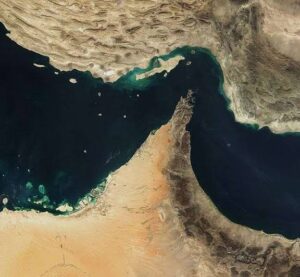
Strait of Hormoz is highly important for global oil supplies and other trades, nearly 20 percent of world oil goes through this strait.
According to Wikipedia, it is a strait between the Persian Gulf and the Gulf of Oman. It provides the only sea passage from the Persian Gulf to the open ocean and is one of the world’s most strategically important choke points. It has been so for centuries, with vast hinterlands rich in luxury trade goods, but no easy access to lucrative trading ports. In his memoirs, Babur, the first king  of the Mughal Empire, recounted how almonds had to be carried from the distant Ferghana region in Central Asia to Hormuz to reach markets.
It has hogged world limelight due to ongoing war between Iran and USA,Israel.
Iran’s new supreme leader, Mojtaba Khamenei, has broken his silence days after he succeeded his slain father. In a message a news anchor read on state television, Khamenei said that the crucial Strait of Hormuz should remain closed and that Iran will continue attacks on its Persian Gulf neighbors.
News media have reported that
Drones, cruise missiles and fighter jets have become a common sight for many sailors stranded on oil tankers and freight ships in the Gulf, after Iran threatened to open fire on any vessels trying to cross the Strait of Hormuz, in response to US-Israeli attacks.
Amid rising tensions in the Persian Gulf and concerns over maritime security, Iran’s Ambassador to India Mohammad Fathali signalled that India could receive safe passage through the Strait of Hormuz, a critical global shipping route.
Speaking to reporters, the envoy suggested that developments ensuring India’s access through the strategic waterway could emerge soon.
“Yes, because India is our friend. You will see it within two or three hours,” Fathali said when asked whether India would receive safe passage through the Strait of Hormuz.
Without doubt Strait of Hormuz is a critical global energy chokepoint, with approximately 20% of the world’s daily oil supply and one-third of global Liquefied Natural Gas (LNG) passing through this 33-km-wide waterway connecting the Persian Gulf to the open ocean. It is vital for shipping oil from major producers like Saudi Arabia, Iran, and the UAE to international markets. Disruptions can cause immediate global energy price spikes and significant economic disruption.
Key Strategic Importance:
Energy Supply: About 20 million barrels of oil transit the strait daily, representing a significant portion of the global consumption.
Global Economy: A blockade or disruption could result in soaring oil prices, affecting international trade, manufacturing, and transportation.
One hopes war ends soon and this strait is again fully open without threats for global exports .

International Women’s Day 2026 cover story 9 March

International Women’s Day 2026

News Kashmir Desk
Women are integral part of universe. International Women’s Day 2026 is being marked. International Women’s Day (IWD) is celebrated on 8 March, commemorating women’s fight for equality and liberation along with the women’s rights movement. International Women’s Day gives focus to issues such as gender equality, reproductive rights, and violence and abuse against women.
As a matter of fact, it’s motivated by the universal female suffrage movement, International Women’s Day originated from labor movements in Europe and North America during the early 20th century.
This year International Women’s Day theme, “Give To Gain”, underscores the principle that meaningful progress on gender equality requires deliberate contributions from governments, institutions and individuals. When we invest in women’s safety, rights and leadership, we strengthen societies as a whole. The campaign’s message is clear: gender equality is not a concession, but a collective benefit.
Women still face lot of discrimination.
Here are three facts about women discrimination:
1. Global pay gap: Women earn approximately 77% of what men earn for similar work, highlighting persistent wage inequality.
2. Limited access to education:  132 million girls worldwide are out of school, often due to factors like child marriage, poverty, and cultural norms.
3. Violence and harassment: 1 in 3 women globally experience physical or sexual violence, often facing barriers to justice and support.
The expert pulse of noted experts is —
International Women’s Day is not simply a commemoration. It is a call to action — to defend the gains already made, confront the challenges ahead, and accelerate efforts to build a region where every woman and girl can live free from violence, fear and discrimination, and where their full participation is recognised as indispensable to our shared security.
International Women’s Day (IWD) has been around for over a hundred years, as have many of the issues still impacting women’s advancement. Since 1911, IWD belongs to all who care about gender equality. Celebrate women’s achievement. Raise awareness about discrimination. Take action to forge gender parity. All IWD activity is valid, that’s what makes IWD so inclusive.
We should take all steps to make this world a beautiful place for women. The need of the hour is to end all discrimination against women.We need to take pledge to make this world a better place for our women.

Snow Delights Kashmir, cover story 26 January 2026

Snow  delights Kashmir
News Kashmir Analysis
Snow is symbol of hope. Snow lifts up atmosphere. Snow gives renewed hope. Snow is great source of water. After much dry climate the snow is here in Kashmir. The snow has brought both delight and hope in Kashmir.
Since January 22 the Most parts of Kashmir received fresh snowfall, including the season’s first in Srinagar city, leading to the closure of the Srinagar-Jammu national highway, and cancellation of over 20 flights here, officials said.
This broke long dry spell which had caused crisis in Kashmir on water front.
While the plains of Kashmir recorded light to moderate snowfall, the upper areas and higher reaches of the valley received moderate to heavy snowfall, the officials said.
Snow was quite heavy in rural and mountain areas.
famous skiing resort of Gulmarg, in north Kashmir, received over two feet of fresh snow, while the Sonamarg tourist resort in central Kashmir’s Ganderbal district recorded over six inches, and the Pahalgam resort in south Kashmir’s Anantnag district around three inches, the officials said.
According to Kashmir Weather, areas close to the Pir Panjal range bore the brunt of the storm. In Shopian district, the plains recorded snowfall ranging from 1.5 to 3 feet, while higher reaches witnessed accumulations of up to five feet, an unusually high volume for such a short duration.
Earlier, the India Meteorological Department (IMD) issued a  weather advisory warning that two western disturbances in quick succession are likely to affect Jammu and Kashmir and adjoining areas from January 22 to 24 and again from the night of January 26 to the forenoon of January 28.
The snow has brought smile on people especially the farmers as it will provide great impetus to agriculture and horticulture.
Expert pulse is that snow has great advantages. Snow acts as a vital natural insulator, protecting soil and plants from extreme cold and freeze-thaw damage while storing moisture for spring. It serves as a “poor man’s fertilizer” by adding nitrogen to the soil, supports ecosystems, helps wildlife survive, and provides, through its high albedo, a cooling effect on the planet.
The snow has definitely lifted the mood of people of Kashmir. We are well aware Kashmir’s snow transforms the valley into a serene winter wonderland, with snow-capped mountains, frozen lakes, and picturesque villages. The snow-covered landscapes offer breathtaking views, making it a perfect destination for winter sports and romantic getaways, enchanting all who visit with its tranquil beauty.

Physical books are important, 2 February 2026 cover story

Physical books are important

News Kashmir desk
Physical books hold a unique place in world since times immemorial. The scholarly and reading pulse of humanity has been that physical books are comforting to our mind.
As we as humans hold a book in our  hands and feel ts presence the feel is definitely of hope and knowledge . Physical books make us lot happy.
Physical books are not mere objects. The physical books are ambassadors of intellectual capacity, knowledge, learning, and academic growth , and they have always in positive manner shaped human  civilizations for ages .
In today’s rapidly advancing technological world, especially with the advent  of the digital age, no doubt the physical books are not now that much popular and it has become paramount to recognise the spark  of knowledge associated with physical books and take the pledge to ensure  value of printed books.
Book shops are not just needed but should be centers of attraction everywhere.
The expert pulse is united in this thought that in this day and age of   technology we have moved in every sphere of life and life is quick. But ,still  physical form of book  cannot be replaced as the emotional and intellectual connection created by reading a physical book.
In Kashmir especially, it is the need of the hour for students to realize that nothing compares to the experience of reading a real book.
In a way the fragrance in form of the weight of the pages, the texture of the paper, and even the subtle scent of ink create a sensory experience that digital screens simply cannot provide.
Expert pulse of knowledge voices is well laid out on it. Based on what we read on internet and from expert pulse is that we need physical books.
They urge –
Students in Kashmir, across the country, and around the world must recognize that reading printed books gives us a meaningful connection with the text. This great facet  often enhances focus and understanding, making learning more meaningful and memorable.
Experts agree that engaging multiple senses while reading is great boost to our health and mood. Turning pages by hand, and then focusing and underlining  key points, writing notes in the margins, or marking important sections adds a personal touch to learning and strengthens comprehension.
The world knowledge paradigm is well aware that  printed books are epitome of  simplicity. They don’t depend on electricity, internet connection, or charging.
Physical books dont distract us by notifications or digital distractions—just the reader and the story.
We are very well aware that physical book or books  can be opened anywhere, anytime, allowing the mind to fully immerse itself in the words.
Children and young people especially should appreciate the unique charm of physical books. Whether it is the design of the cover, the feel of the pages, or the quiet joy of reading, these elements create an experience that is both timeless and enriching.
The youth of Kashmir must understand that physical books offer something truly special—an experience worth  passing on to future generations.